
Here is the English translation of your blog post. I have maintained the HTML image tags so you can easily copy and paste this into your website editor.
—–
From November 18th to 22nd, nottuo participated in an inspection tour from Taipei to Taitung as part of a mutual exchange program between Taiwan and Nishiawakura.
We have welcomed delegations from Taiwan to Nishiawakura twice before, hosting inspections where nottuo was also involved. However, this time it was our turn to visit Taiwan to officially visit various places and institutions and present our business content.
Additionally, nottuo made separate moves to visit Taiwanese media companies and had time for dialogues including proposals for collaboration (I will share that story another day).
Visiting the rural areas of Taitung—a regional city in Taiwan—was particularly rewarding. We gained a lot of stimulation from encounters with the land that went beyond mere sightseeing.
)
As part of nottuo’s global expansion actions that started this year—following Denmark in June and Taiwan in November—we are also scheduled to revisit Taiwan in December by invitation. Our movement into the world is accelerating, including plans for the coming year.
Taiwan Tour Day 1
The first place we visited was the select shop “Earthing Way” (地衣荒物) in Taipei.
They not only handle tools inherited from Taiwan’s past but also work on redesigning those techniques with a modern sensibility. We listened to the owner, who selects items that are both old and new.
It made sense that the owner is a graphic designer himself; the space was meticulously curated with a well-constructed worldview.
They apparently have many exchanges with Japan, and we were able to discuss shops we both knew in Tokyo and exchange views on the attitude toward craftsmanship.
)
)
)
)
)
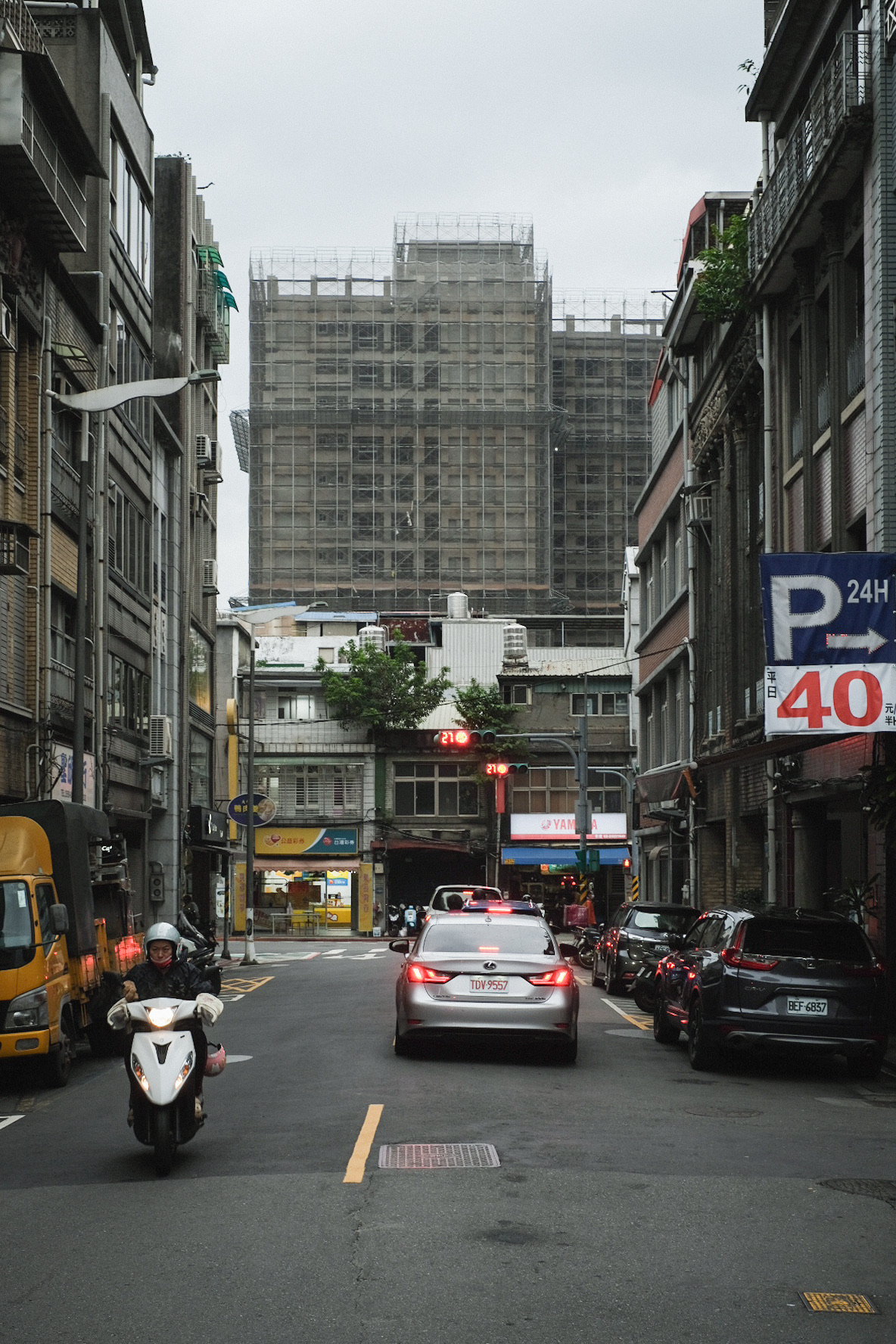
Walking through Taipei, old buildings remain firmly standing even in urban areas, creating an interesting gradation between the old and the new.
If you step into a back alley behind a beautiful building, you find a different atmosphere where density, chaos, and a sense of languor coexist, allowing you to fully feel the presence of the land.
)
)
)
)
)
)
Taiwan Tour Day 1: TGDA
On the first night, we attended an exchange meeting with members of the “TGDA: Taiwan Graphic Design Association.”
I spoke about nottuo’s design work based in a remote region of Japan and the initiatives of “Ten-Ten” (tenten-kikaku) which designs systems. We were able to learn about their practices, using the same medium of design.
Hearing directly from designers around the world about the creations they produce while facing the issues of their time and place allows us to feel their achievements and struggles with greater heat and reality.
It was a great opportunity that reinforced nottuo’s intention to continue going out into the world to meet designers, and to invite designers from around the world to us.
)
Taiwan Tour Day 2: Architectural Stroll
After finishing an official visit to a government agency first thing in the morning, we had a little time to stroll through the streets of Taipei during the gap before our next appointment.
It is interesting to see how the culture of the land appears in public architecture and spaces within the urban environment, allowing you to directly feel the history and vegetation.
Perhaps the changing balcony iron railing designs on each floor reflect the owner’s aesthetic.
The borderless colors of the traffic signs look fresh, like sudden splashes of accent color in the city landscape.
There is a vernacular charm that can be seen precisely in anonymous architecture.
\)
\)
\)
\)
\)
\)
\)
\)
\)
)
)
)
\
This was a travel day moving from Taipei to Hualien and then to Taitung using express trains and buses.
We stopped at two locations along the way to learn about the traditional food and current livelihood of Taiwan’s indigenous Amis people.
**Stop 1**
In the old days, before metalworking technology existed, people likely created earthenware for cooking. However, they also invented a technique of boiling water using heated stones.
Although it takes time (4 hours just to heat the stones\!), this technique, which can be practiced using materials found nearby, was likely performed widely around the world.
Using four types of vegetables (foraged, not cultivated) and river shrimp as ingredients, seasoned only with water, salt, and chili peppers, it was incredibly delicious—the power of the broth is amazing.
\)
\)
\)
\)
\)
\)
\)
\)
\)
\)
\)
\)
**Stop 2**
In an area where the culture of “sea people” remains, we experienced the fishing of the Amis “Ama” divers. Unlike Japanese Ama divers, the women here do not dive into the sea but walk briskly along the rocky intertidal zones to catch shellfish and crabs. Although I was handed tools, I didn’t feel like I could catch anything at all, so I found myself captivated by the strange beauty of dead coral clinging to the rocks.
I was happy to encounter shapes created by time here as well, something I’ve been particularly interested in lately.
\)
\)
\)
\)
\)
\)
\)
\)
\)
\)
\)
\
On the final day of the program in Taiwan, we participated in a public event featuring an exhibition and talk session at the nottuo and Ten-Ten booth. The venue was @culturebank66 in the town of Chenggong, Taitung—a former bank renovated into a café and event space.
Players from the Nishiawakura crew and the Taiwan crew took turns giving presentations and talk sessions. nottuo engaged in a dialogue with “Nishio Peninsula,” fellow creators building an area brand in a field of ocean and mountains.
International exchange has taken place in many parts of the world, but a project connecting “frontiers” (remote rural areas) like this is rare and, I believe, very significant.
For us at nottuo, as we continue our mission to expand the possibilities of design in these frontier areas, meeting face-to-face in a real space and feeling each other’s energy is essential for connecting the dots of frontiers around the world. It is truly as the saying goes: “Seeing is believing.”
\)
\)
\)
\)
\)
Strolling around the town during the breaks in the event, it was interesting to see the unique architecture, vegetation, and scenery of the land everywhere. The resilience of roots spread by trees in a hot country, dogs lying languidly on the road, flashy fishing boats reminiscent of Japanese “Dekotora” trucks—history, culture, and customs cultivated over time are lurking everywhere, brewing the unique “scent” of the land.
Just as the human brain perceives through the electrical signals generated by the stimulus of change, and just as one leaves the village because they live in it, we go overseas precisely because we are based in Japan. We must not forget to hone our skills daily: to give ourselves change and stimulation, to correctly perceive the place we base ourselves in, to know its charm, and to convey it.
\)
\)
\)
\)
\)
\)
\)
\)
)
)
)
)
Through the people we met in Taitung, which we visited for the first time, and the charm of the land we learned about there, I believe there was a mutual gain, with the story of our initiatives in the mountains of rural Japan left as a souvenir in return.
Spending time, money, and energy to visit a place creates primary information experienced with the body that is deeply engraved, and there is immense value in that.
Receiving and giving are equal. I intend to use this entire experience in Taiwan—and the fact that experience holds value—as fuel for the future.
Deep gratitude to everyone involved in this program.
)
—–
Epilogue
I left the sales of Ten-Ten items on the day after the talk session to the staff and returned to Japan, but I was grateful to receive a report from the field that they sold out within an hour of opening.
It was an opportunity to realize once again that even remote frontiers are connected to the world in this era.
Xie Xie (Thank you) 🥚